
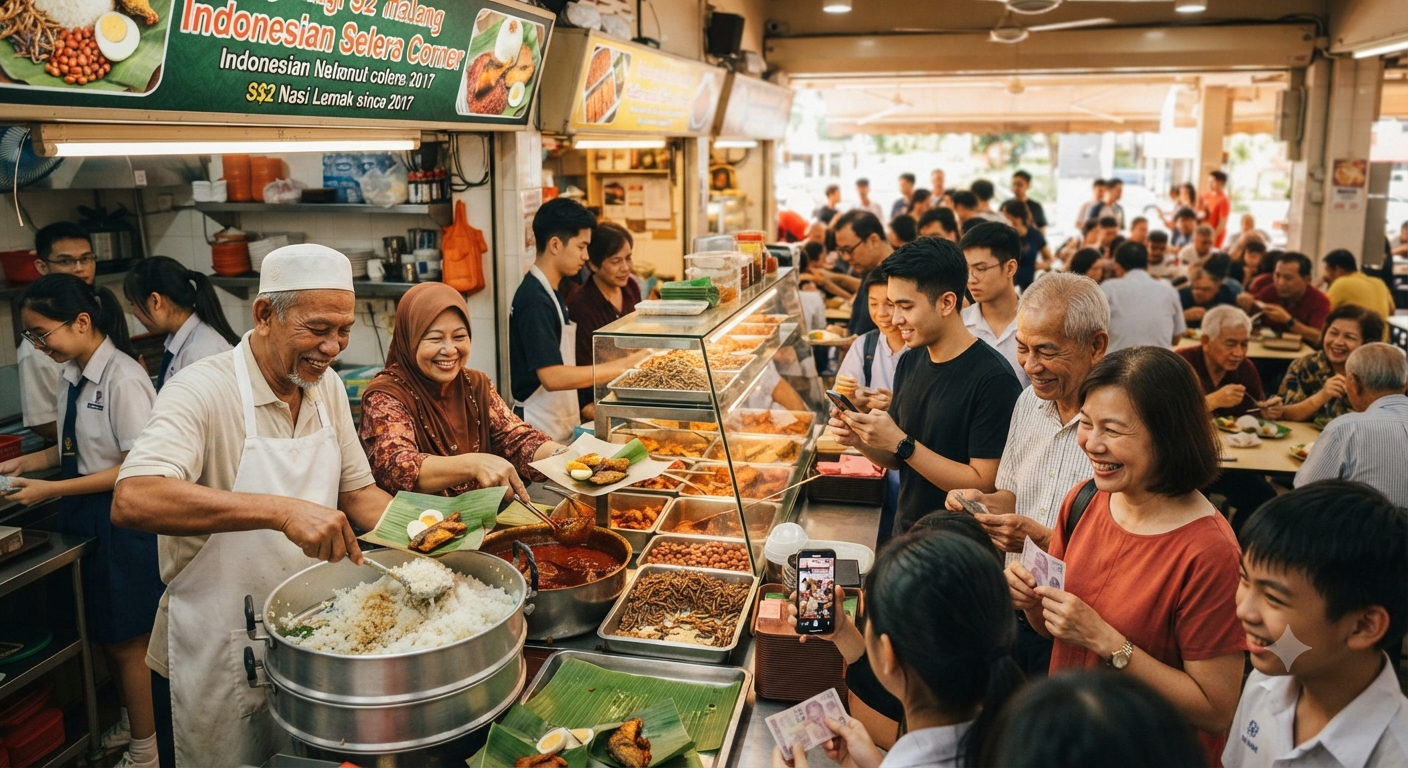
Aiyo, stir your kopi, kakis, pull up a plastic stool, and let me tell you a story about Yishun that doesn’t involve strange neighbourhood occurrences or MRT delays, but will still blow your mind faster than a cup of Kopi-O Gao on an empty stomach.
If you told anyone in Singapore that a hawker stall is paying a jaw-dropping S$10,000 a month in rent (which quietly balloons to a cool S$13,000 once electricity, water, and miscellaneous coffeeshop maintenance fees are factored in), you’d expect a plate of food there to cost at least a small fortune. You’d probably check your bank app and start sweating just hearing the numbers.
Yet, tucked away in a private coffeeshop at Block 101, Yishun Avenue 5, Indonesian Selera Corner is doing the exact opposite of what economic survival and basic common sense dictate. They are stubbornly, proudly selling packets of S$2 Nasi Lemak every single day—a price they haven’t raised in a whole decade!
The Economics of Madness: Charity Meets Brutal Reality
In today’s Singapore, where even a simple cup of teh-C kosong or a packet of tissue paper feels like it’s auditioning for a luxury tax, two dollars for a complete, hot meal sounds like a glitch in the national simulation.
When you order that packet, you aren’t getting a miserable scrap of food either; you get your fragrant coconut rice, a piece of fried fish, a fried egg, crunchy cucumber slices, and a dollop of shiok sambal.
The veteran owners, uncle Reban and auntie Sakdiah, aren’t running a non-profit organization by sheer accident. They keep the price pinned at two bucks purely out of a massive, golden heart.
Their original vision was simple and pure: they wanted to make sure neighbourhood seniors, students rushing between classes, and low-income residents could always walk up to the stall and secure a warm, filling meal without breaking their piggy banks or feeling stressed about money.
Auntie Sakdiah put it best in true hawker philosophy: “We can always make money on other days.” Absolute legend behaviour.
There’s just one tiny, terrifying problem: The math simply doesn’t add up.
When you break down the raw ingredients alone—the quality rice, the fish, the fresh eggs, the cooking oil, and the packaging—it costs them roughly S$1.30 per packet just to put the components together before a single stove is even turned on.
Factor in that suffocating S$10,000 commercial rent, and every time someone buys a S$2 nasi lemak, the family is practically bleeding money just to keep the neighbourhood fed.
For years, the uncle and auntie were working themselves to the bone, staring at the terrifying end-of-month utility bills, and wondering how much longer they could keep the dream alive before the financial walls caved in.
Enter the Gen Z Rescue Squad: Tech Meets Tradition
Every good local drama needs a plot twist, and for this family, salvation didn’t come from a government grant or a sudden windfall. It walked right into the kitchen in the form of their 25-year-old son, Adam Danish.
When Adam stepped into the family business, he didn’t panic blur sotong or throw his hands up in despair. Instead, he put on his modern-day hawker-preneur hat and started crunching the actual numbers.
He quickly realized his parents were only looking at the “top line” sales volume and burning themselves out day and night without tracking how those brutal overheads were quietly eating their profits alive.
Being a digitally native Gen Z, Adam decided to fight high commercial rent with high-tech wizardry and smart business restructuring:
- Menu Balancing Act: He kept the sacred S$2 Nasi Lemak completely untouched because it was the soul of the stall, but he balanced out the books by aggressively pushing higher-ticket, higher-margin items like their signature Nasi Padang dishes and crispy, freshly fried epok-epok.
- TikTok Power & Livestreams: He didn’t just sit back and wait for random customers to walk past the coffeeshop. Adam fired up TikTok livestreams to showcase their mouth-watering food preparation, drawing massive digital crowds and pulling in up to S$12,000 in gross revenue spikes from online buzz.
- AI to the Rescue: To save money on manpower—because hiring an extra pair of human hands would easily cost an extra S$900 a month in wages—Adam deployed a clever S$50-a-month AI chatbot to handle WhatsApp customer orders automatically. No extra staff wages wasted, and zero missed messages during peak hours!
Why This Story Matters to All of Us
At the end of the day, this isn’t just a quirky news snippet about surviving high rent or Gen Z tech upgrades in a heartland coffeeshop. It’s a powerful testament to the classic, unyielding Singaporean spirit meeting modern-day resilience.
With crushing commercial rents in private coffeeshops squeezing many traditional hawkers out of business and forcing them to close down quietly, it would have been so easy for uncle Reban and auntie Sakdiah to throw in the towel, blame the economy, or jack up the price of their nasi lemak to S$5.
Instead, with a bit of youth-driven innovation, a solid grasp of digital marketing, and a whole lot of gritty family teamwork, they managed to keep their community-first mission alive against all odds.
The Kopitiam Verdict:
Next time you find yourself wandering around Yishun, skip the strange news headlines, head straight down to Block 101, and buy a S$2 Nasi Lemak.
Support a family with hearts of gold and a son with serious business rizz. Because at this rate, keeping our authentic hawker heritage alive takes more than just good food—it takes a community that actually shows up, drinks kopi, and eats with a purpose.
Huat ah!


Leave a comment